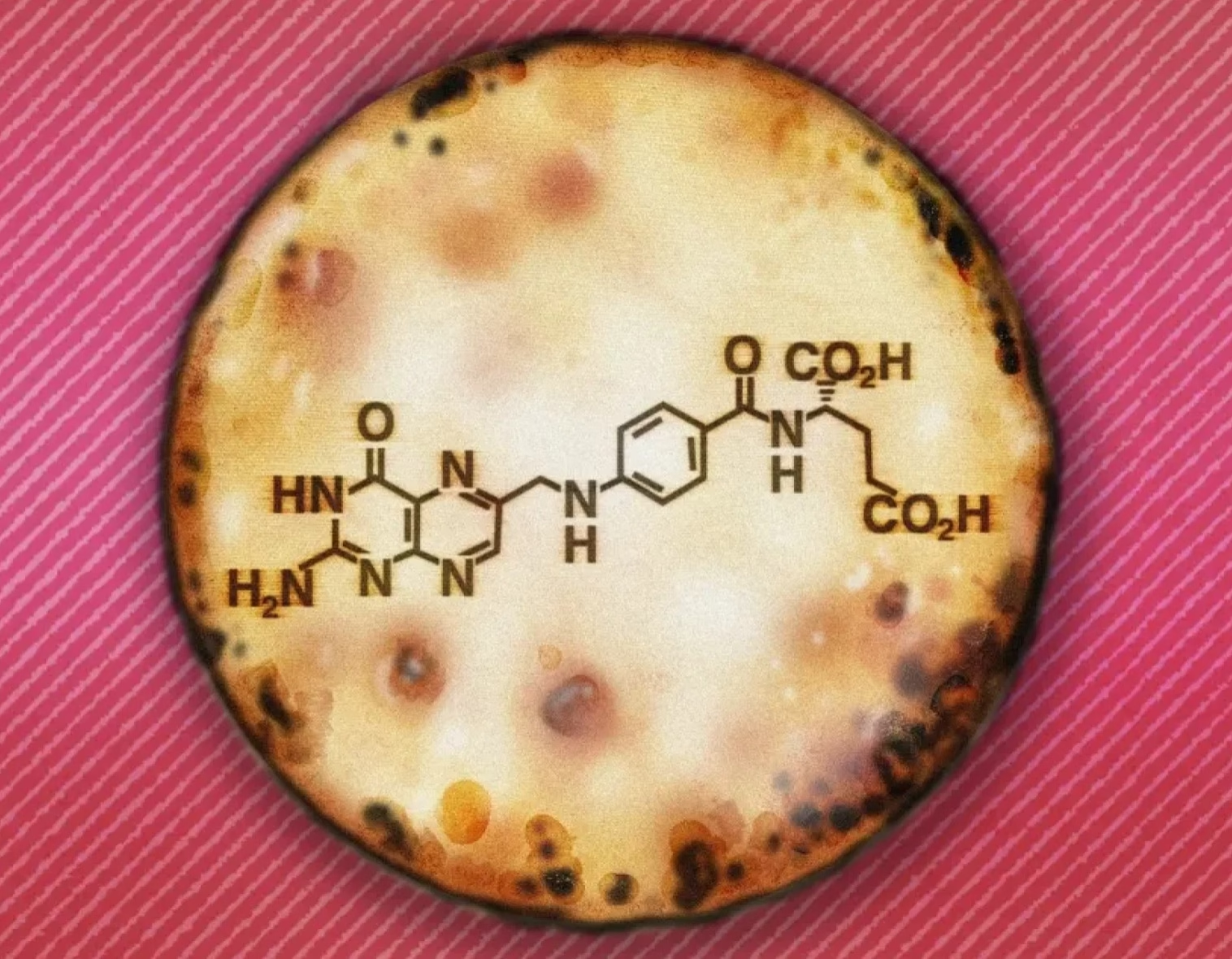
(Ivan EhlersL.A. TACO)
It’s Not Just a Tortilla—It’s 12,000 Years of Culture
When California’s new fortified tortilla law officially took effect on January 1, 2026, it didn’t just change a recipe—it ignited a deep cultural debate. For generations, corn tortillas have been made with just three ingredients: corn, water, and lime. Now, under Assembly Bill 1830, certain tortillas must legally include synthetic folic acid—a move that has left many chefs, tortilleros, and food historians asking a difficult question:
Is public health policy crossing into cultural colonization?
Let’s break it down in a clear, human way—without the noise.
What Does the New Tortilla Law Actually Require?
Under AB 1830, sponsored by Fresno Assembly Member and physician Joaquin Arambula, manufacturers using industrial corn flour (masa harina) must add:
- 0.7 mg of folic acid per pound of masa
- Clearly label it on nutrition panels
The stated goal is to reduce neural tube defects (NTDs) such as spina bifida, which research shows occur at higher rates in some Latino communities.
From a public health standpoint, fortified grains have worked before. Since the FDA mandated folic acid in wheat-based products in 1998, NTDs dropped by 30–40% nationwide, according to CDC data.
But here’s where things get complicated.
Why Chefs and Tortilleros Are Pushing Back
Many in the Mexican food community argue the law confuses industrial food with ancestral foodways.
Artisan producers who use 100% nixtamalized heirloom corn (maíz criollo) point out that traditional corn tortillas are already naturally rich in nutrients—especially calcium—thanks to the nixtamalization process.
Fátima Juárez, founder of Komal L.A. and a new mother herself, explains it plainly:
“Artificial folic acid tastes bitter. I had stomach issues while pregnant until I switched to an organic vitamin. Yes, it affects flavor.”
Food journalist Gustavo Arellano echoed that concern after a blind taste test, noting that fortified tortillas felt rubbery and left an unnatural aftertaste.
For chefs who see tortillas as living cultural artifacts, this isn’t just about nutrition—it’s about respecting Indigenous knowledge that predates modern food science by millennia.
Who Is Exempt—and Who Isn’t?
Here’s an important clarification that often gets lost online:
Exempt from the law
- Small molinos
- Tortillas made with 100% nixtamal and heirloom corn
- Craft producers using traditional stone-grinding
Required to comply
- Large-scale producers using industrial masa harina
- Tortillas made from highly processed, often GMO corn
Flour tortillas are also completely exempt.
In other words, the law mainly affects cheaper, mass-produced corn tortillas, not artisanal ones—but many small producers didn’t know that at first.
The GMO Corn Reality Few Talk About
Juárez and other chefs acknowledge a hard truth:
Most tortillas consumed in the U.S. come from genetically modified, highly processed corn that has lost much of its original nutritional value.
From that lens, fortification becomes a patch for a broken food system, not an attack on tradition.
Still, critics argue the law treats symptoms rather than causes—industrial agriculture, food deserts, and health inequity.
How Traditional Tortillas Were Saved from Overreach
The bill’s early drafts nearly included all tortillas, including those made with 100% nixtamal. That’s when Enrique Rodriguez, CEO of La Princesita Tortillería, stepped in.
Founded in 1972, La Princesita supplies hundreds of restaurants across Los Angeles. Rodriguez flagged the bill as “ambiguous and overbroad”, prompting amendments that ultimately protected traditional producers.
It was a rare moment where cultural advocacy successfully shaped public policy.
So, Is This About Health—or Control?
Supporters see AB 1830 as a necessary health intervention. Critics see it as government overreach into ancestral cuisine. The truth likely sits somewhere in the middle.
What’s clear is this:
A tortilla is never just food.
It’s identity, history, survival, and resistance—pressed into a warm, humble circle.
And when laws touch culture, even with good intentions, people deserve to be heard.
Featured Snippet–Optimized Summary
California’s fortified tortilla law requires folic acid in industrial corn tortillas to reduce birth defects, but exempts traditional nixtamal tortillas—sparking debate over cultural preservation versus public health.
#TortillaTradition #FoodPolicyDebate #MexicanCuisine #PublicHealthVsCulture #CaliforniaFoodLaw