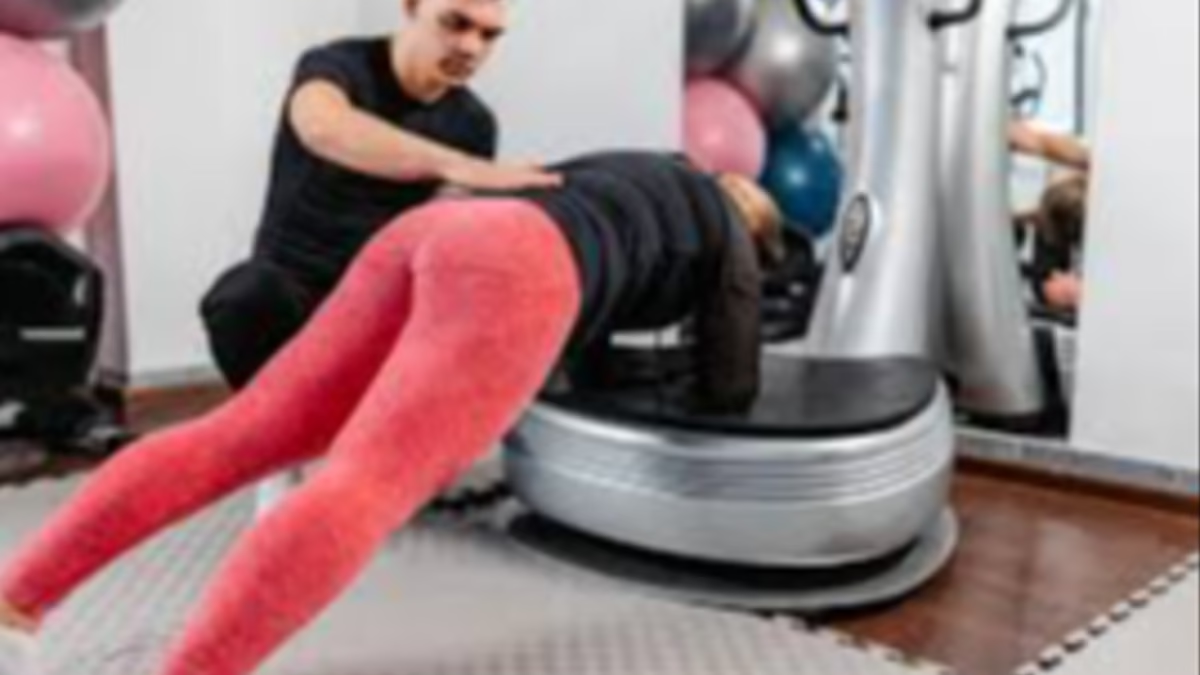
Are Vibration Plates the Tool You Need to Get Fit? This Is What Fitness Experts Say – CNET
What Are Vibration Plates—and Why Is Everyone Talking About Them?
If TikTok is your morning newspaper, you’ve probably seen influencers standing on vibration plates claiming everything from effortless weight loss to thyroid “detox.” It looks futuristic. It sounds scientific. And yes—it’s easy to be skeptical.
But here’s the twist: vibration plates aren’t just social-media gimmicks. Elite athletes, rehabilitation clinics, and even astronauts have used them for years. Researchers have been studying whole-body vibration for decades. So the real question isn’t whether they work—but how much they actually help.
Let’s separate science from social-media hype.
How Do Vibration Plates Work? (Quick Answer for Featured Snippets)
Vibration plates work by sending rapid vibrations through the body, forcing muscles to contract and relax multiple times per second.
There are two main types:
- Linear plates move straight up and down.
- Oscillating plates tilt side to side like a seesaw.
These platforms typically vibrate 5–50 times per second with a very small range of motion (up to about 14 mm). Even though the movement is subtle, your muscles respond instantly—similar to how they do during traditional exercise.
What Happens Inside Your Body?
Those rapid vibrations trigger involuntary muscle contractions. According to exercise physiologists, this leads to:
- Increased blood flow
- Mild rise in body temperature
- Activation of muscle proteins (myokines) that help regulate glucose
- Extra gravitational load on bones and muscles
In simple terms: your body thinks it’s working harder than it actually is.
Proven Benefits vs. Viral Claims
Let’s be honest—vibration plates are not magic. But science does support modest benefits in specific situations.
✅ Where the Science Is Strong
- Improved balance, especially in older adults
- Better neuromuscular activation, useful in rehabilitation
- Potential improvement in bone mineral density, particularly in post-menopausal women
- Faster muscle warm-ups, helpful for athletes
- Temporary pain relief, due to sensory distraction
This explains why vibration plates are commonly used in rehab centers and sports performance programs.
❌ Where the Hype Falls Apart
- Weight loss: Calorie burn is minimal—less than brisk walking
- “Fat shaking” or spot reduction: No scientific backing
- Lymphatic drainage claims: No studies directly proving this
Standing on a vibration plate won’t replace walking, strength training, or cardio.
Who Benefits Most from Vibration Plates?
Experts generally recommend vibration plates for two very different groups:
- People with limited mobility
- Older adults
- Individuals recovering from injury
- Those unable to perform traditional exercise
- High-level athletes
- As a warm-up tool
- To overcome performance plateaus
- To add variety to training routines
For the average healthy adult, vibration plates can be a supplement, not a substitute.
How to Use a Vibration Plate Safely
If you’re curious and want to try one, here’s a beginner-friendly approach:
- Start with 10–15 Hz
- Do 5 sets of 30-second intervals
- Stand in a slight squat
- Keep knees bent and hinge at the hips
- Avoid locking your legs to reduce vibration to the head
As you get comfortable, you can add movements like squats, lunges, planks, or bridges—but always progress gradually.
⚠️ Safety note: Standing upright with straight legs may transmit vibration to the head. Rare cases of eye or tissue injury have been reported with poor form.
Final Verdict: Are Vibration Plates Worth It?
Vibration plates aren’t a shortcut to fitness—but they’re not useless either.
If they make your routine more enjoyable, help you stay consistent, or support recovery or balance, they can be a valuable addition. Just don’t expect them to replace real movement.
As experts often say: You still need motivation, time, and consistency—whether you’re walking, lifting, or vibrating.
#VibrationPlates #FitnessScience #ExerciseTrends #HealthyAging #WorkoutFacts